
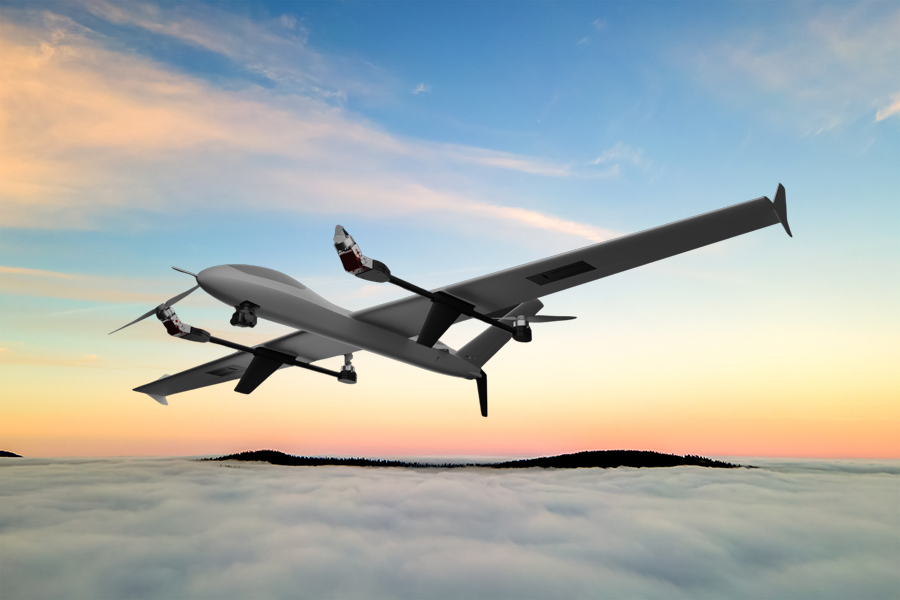
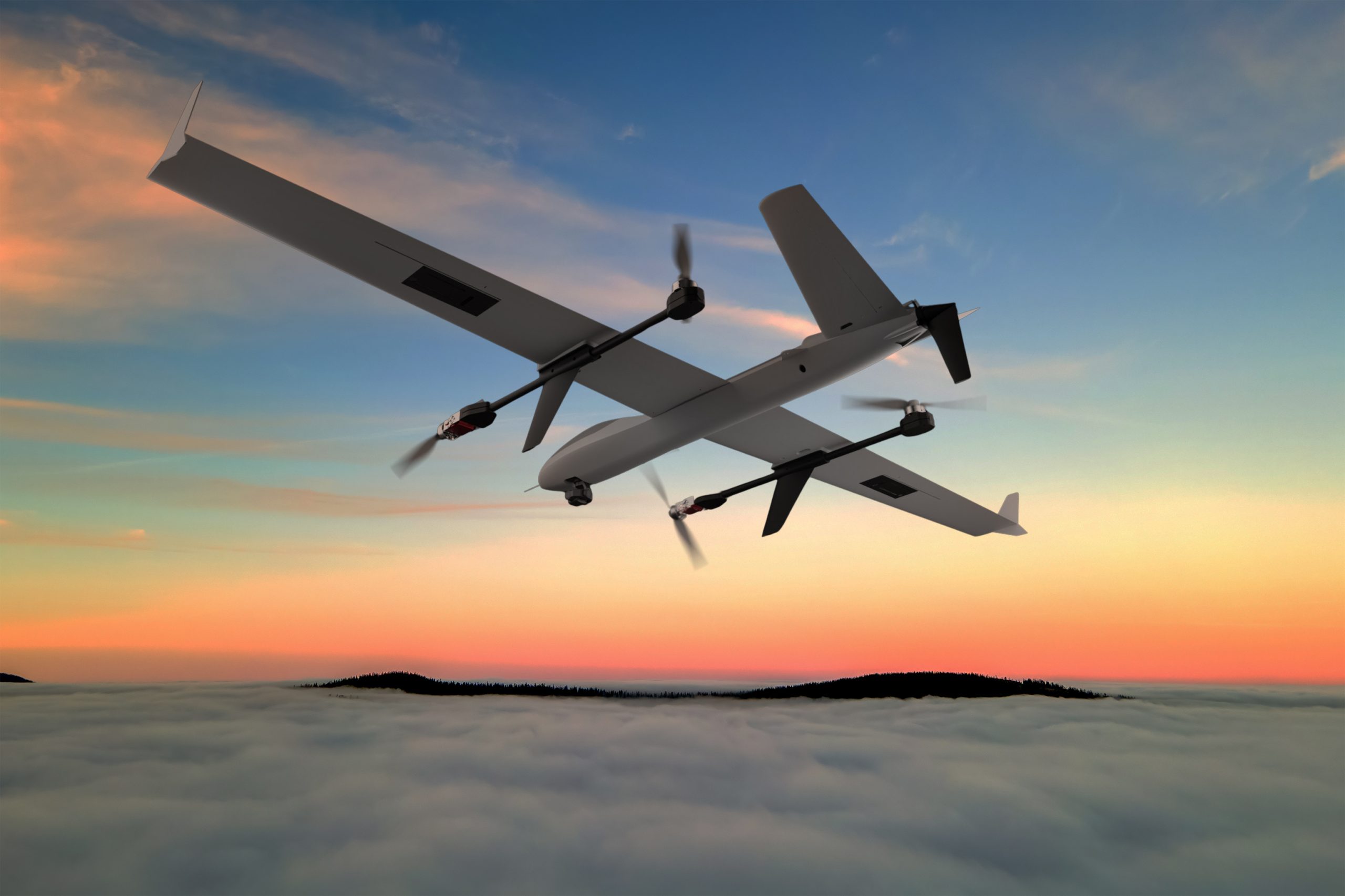
Orbit Fixed wingUAV
Portable Battery-operated Light Weight UAV
55 min
Cruising speed
60 km/h
Distance
100 km
Payload
1 KG



How We Can Help
Key Advantages
Our Fixed Wing VTOL UAVs combine the best aspects of rotor and fixed-wing technologies to deliver unparalleled operational flexibility and safety. These UAVs are designed to automatically take off and land vertically, ensuring they maintain a safe distance from the operator and avoid any hazards associated with traditional rotor approaches. They excel in diverse environments, capable of launching and recovering in confined spaces without the need for a runway. Ease of use is prioritized with a fully autonomous system managed by advanced autopilot, simplifying operations and reducing the need for extensive pilot training. Additionally, the efficient design allows for extended flight durations and faster speeds, making these UAVs ideal for a range of applications, from surveillance to complex aerial mappings.
Safety at take-off and landing
The VTOL fixed-wing drones take off automatically and are kept at a safe distance from the drone operator. This means that there are no more cuts caused by approaching rotors. Besides, VTOL avoids this risk perfectly by flying directly into the sky without any obstacles.
Flexibility
Unlike other fixed-wing drones, which require wide areas and soft terrain to land, the VTOL UAS can take off from confined areas and land smoothly on gravel, between the bushes, in forest aisles, or wherever needed, without the need for any launchers, drops, runways
Easy to use
The traditional take-off method for fixed-wing aircraft requires additional training, whereas flying the VTOL UAVs no longer requires any piloting skills, as the UAV mission is fully autonomous and operated by an advanced autopilot.
Longer flight time and faster speed
Unlike multi-rotors, which require a lot of power to maintain lift, the VTOL drones get all their lift from the wings like a fixed-wing drone and only use motors for thrust, so they can fly faster and stay in the air for longer periods of time.
Specifications
Hardware
Fuselage 1.3m
Wingspan 2.2m
MTOW 6.8kg
Electro Motor Low noise,brushless
Payload 2 kg
Packing Size 1200×500×400mm
Flight Performance
Endurance 55min
Cruising Speed 61.2km/h
Wind Resistance10.8-13.8m/s
Ceiling 6000m
Max Takeoff Altitude 4500m
V Positioning Accuracy 3cm
H positioning Accuracy 1cm+1ppm
Surveying and mapping
The VTOL drones have fast cruising speeds and long flight times, making them very effective at surveying areas larger than 500 hectares.
Inspection and surveillance
They can hover stably in the air and take high-quality footage for professionals to conduct inspections, often used to inspect crops, power lines, and oil and gas pipelines.
Mining and aggregates
he VTOL drones are specially designed or customized for mining applications, providing accurate and comprehensive information on quarry and mine conditions in a short period of time.
Construction and infrastructure
They are mainly used for schedule tracking and communication, pre-construction and site planning, quality control and assurance, bid process preparation, and job site risk mitigation
Environmental monitoring
VTOL drones can be deployed in a wide area for applications such as forestry, meteorology, coastal monitoring, and animal population tracking
Search and rescue
Used by emergency services such as police, firefighters, or volunteer rescue teams, these drones are ideal for searching for missing persons and victims of crime in a wide area and in any environment.
Frequently asked questions
What is a VTOL UAV?
VTOL UAVs (Vertical Take-Off and Landing Unmanned Aerial Vehicles) are drones capable of taking off, hovering, and landing vertically. This design combines the attributes of multirotor and fixed-wing aircraft, providing flexibility in operations without the need for runways
What are the advantages of VTOL UAVs?
VTOL UAVs are highly efficient in maneuverability and can be deployed in locations with limited space, like urban areas or rugged terrains. They are particularly valued for their ability to perform in diverse environments without the infrastructure needed for traditional aircraft
What are the common types of VTOL UAVs?
VTOL UAVs vary by design and the mode of propulsion. Common types include:
- Rotorcraft drones which use propellers for flight.
- Tiltrotor and tiltwing aircraft which combine features of both helicopters
- and airplanes, allowing for efficient horizontal and vertical flight.
Fixed-wing VTOLs which offer longer endurance and heavier payload capacities
How do VTOL UAVs work?
VTOL UAVs use a combination of rotors, fans, or thrusters to generate lift and propulsion. This setup allows them to hover, take off, and land vertically. Advanced flight control systems in VTOL drones manage complex operations like obstacle avoidance and automated navigation
What are the typical applications of VTOL UAVs?
VTOL UAVs serve a wide range of applications across various industries:
Agricultural: They are used for monitoring crop health, irrigation management, and pest control
Public Safety and Emergency Response: Employed in search and rescue operations, disaster management, and law enforcement surveillance
Environmental Monitoring: Useful in wildlife conservation, deforestation tracking, and coastal surveillance
Infrastructure Inspection: Ideal for inspecting pipelines, power lines, and large industrial sites due to their ability to hover and maneuver close to structures
What are the challenges associated with VTOL UAVs?
While VTOL UAVs are versatile, they face challenges like higher energy consumption, noise levels, and the need for sophisticated maintenance due to their complex systems
How to choose the right VTOL UAV?
Selecting the right VTOL UAV involves considering factors like flight time, payload capacity, operational environment, and specific application needs. Models vary widely in features and specifications, catering to everything from beginner needs to advanced commercial uses
